An API 11E pumping unit designation has four parts. In C-456D-305-168, C is the unit type (conventional), 456D is the peak torque rating of the gear reducer in thousands of inch-pounds with D for double reduction, 305 is the structural load rating in hundreds of pounds, and 168 is the maximum stroke length in inches.
What a beam pumping unit does
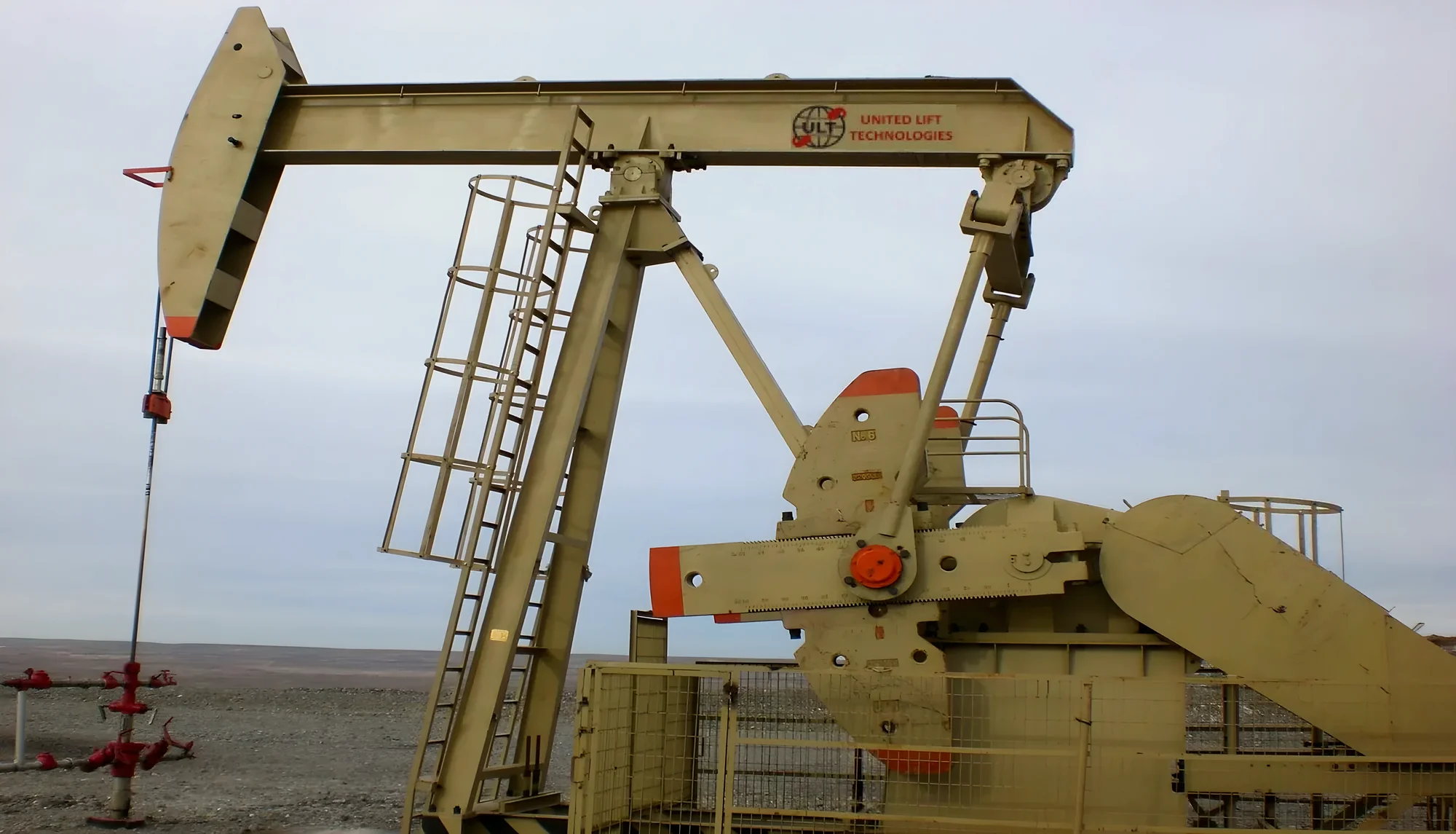
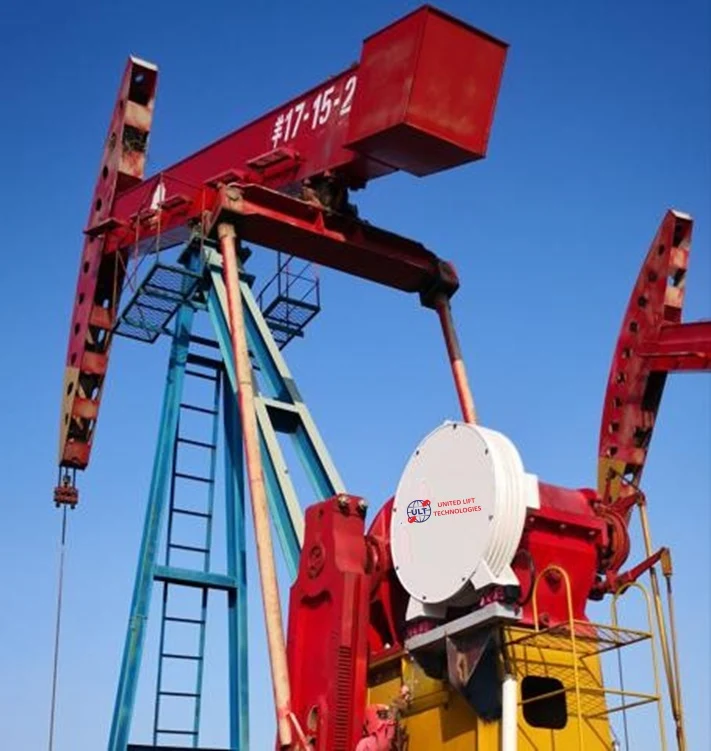
A beam pumping unit, or pumpjack, is the surface half of a sucker rod pumping system. A motor drives the gear reducer, the cranks and counterweights turn, and the pitmans rock the walking beam. The horsehead on the end of the beam moves the polished rod up and down, and the rod string carries that stroke to the downhole pump. API Specification 11E covers the design and rating of the unit's structure and its gear reducer.
Reading the designation
| Part | Example | Meaning |
|---|---|---|
| Unit type | C | The geometry and balancing: C = conventional (crank balanced), A = air balanced, M = Mark II (front-mounted geometry) |
| Peak torque rating | 456 | The gear reducer's peak torque rating in thousands of inch-pounds: 456,000 in-lb |
| Reducer type | D | D = double-reduction gear reducer |
| Structural rating | 305 | The structure's polished rod load rating in hundreds of pounds: 30,500 lb |
| Maximum stroke | 168 | The longest polished rod stroke the unit can be set to, in inches |
So a C-456D-305-168 is a conventional unit with a 456,000 in-lb double-reduction gearbox, rated for a 30,500 lb peak polished rod load, with strokes up to 168 in. Most units also offer shorter stroke settings, selected by moving the pitman to a different crank hole.
Standard gear reducer sizes
API 11E uses a standard series of gear reducer ratings, in thousands of inch-pounds of peak torque. The common sizes are:
| Size | Peak torque (in-lb) |
|---|---|
| 25 | 25,000 |
| 40 | 40,000 |
| 57 | 57,000 |
| 80 | 80,000 |
| 114 | 114,000 |
| 160 | 160,000 |
| 228 | 228,000 |
| 320 | 320,000 |
| 456 | 456,000 |
| 640 | 640,000 |
| 912 | 912,000 |
Each size is roughly 1.4 times the one before, so stepping up one size gives about 40% more torque capacity. Smaller and larger sizes also exist.
The three ratings, and how to use them
Choosing a unit means checking the well's loads against all three numbers.
1. Structural load. The peak polished rod load, which is the rod string's weight in fluid plus the fluid load plus dynamic loads at the bottom of the stroke, must stay below the structural rating. A predictive design program or a measured dynamometer card gives the peak load.
2. Gear reducer torque. The net torque on the gearbox depends on the difference between the well load and the counterbalance at each point in the stroke. The peak net torque must stay below the reducer rating. A common cause of gearbox overload is poor counterbalance rather than an undersized unit, so balancing the unit is as important as choosing it.
3. Stroke length. A longer stroke at a slower speed usually lifts the same volume with lower peak loads and less rod fatigue than a short, fast stroke. The stroke you need follows from the target rate, the pump size and the pump displacement formula.
Treat the ratings as limits, not targets. Running a unit close to its gearbox rating every stroke shortens its life, so size with some margin and plan for the well's future loads as the fluid level drops.
Unit types compared
| Type | How it is balanced | Typical use |
|---|---|---|
| Conventional (C) | Counterweights on the cranks | The most common type; simple, robust and easy to service |
| Mark II (M) | Class III geometry with phased (offset) crank counterweights, giving a slower upstroke of about 195° of crank rotation | Can lower peak torque and power on deeper, heavier wells; must run in one direction |
| Air balanced (A) | A compressed-air cylinder instead of counterweights | Large loads where a lighter, more compact unit is needed; offshore or portable use |
| Long stroke | Very long strokes driven by a chain or belt rather than a crank | High rates from deep wells at low stroke speeds |
ULT builds API conventional beam units and long stroke units.
Gear ratio, speed and the motor
The gear reducer converts motor speed to pumping speed. ULT reducers use double-reduction herringbone gearing with a ratio between 28 and 30, so the motor speed, the motor and unit sheave sizes and the reducer ratio together set the strokes per minute. A permanent magnet motor drives the reducer directly with no belts or sheaves, and a variable speed drive in the rod pump controller lets you change pumping speed without changing sheaves.